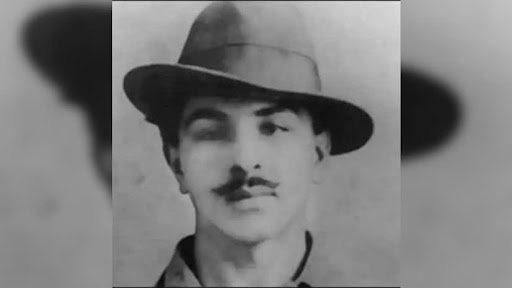
Who is Bhagat Singh?
Bhagat Singh was an Indian revolutionary freedom fighter who was hanged to death by British colonisers at the age of 23 years. Fondly known as ‘Shaheed (martyr) Bhagat Singh’, he is considered a national hero of India’s freedom struggle against colonial rule. As a teenager, Bhagat Singh popularised the slogan of ‘Inquilab Zindabad’ which eventually became the catchphrase of the Indian independence movement.
Bhagat Singh’s Life
Bhagat Singh was born in a Sikh family in Banga village of Faisalabad district (previously called Lyallpur), now in Pakistan’s Punjab province, on 27 September 1907. As his family was deeply inspired by nationalism, he too became actively involved in the country’s freedom movements.
He quit education at the age of thirteen and got admitted to the National College in Lahore, where he studied European revolutionary movements. When his parents tried to get him married, Bhagat Singh left home for Kanpur. In 1926, Bhagat Singh established the ‘Naujavan Bharat Sabha (Youth Society of India) and joined the Hindustan Republican Association (later known as Hindustan Socialist Republican Association). During that time, he met many anti-colonial activists.
In December 1928, Bhagat Singh, along with Sukhdev and Rajguru, planned to avenge the death of Indian nationalist leader Lala Lajpat Rai and plotted to assassinate the Superintendent of Police James Scott in Lahore.
However, in a case of mistaken identity, John Saunders, the Assistant Superintendent of Police was shot. To avoid being recognised and arrested for the crime, Bhagat Singh escaped from Lahore to Calcutta after shaving his beard and cutting his hair.
In April 1929, Singh and Batukeshwar Dutt bombed the Central Assembly Hall in Delhi, and shouted the slogan of “Inquilab Zindabad!”. He was later arrested after the incident.
Execution of Bhagat Singh
Bhagat Singh and his revolutionary comrades Rajguru and Sukhdev were hanged by the British on March 23, 1931, in the Lahore Conspiracy case.
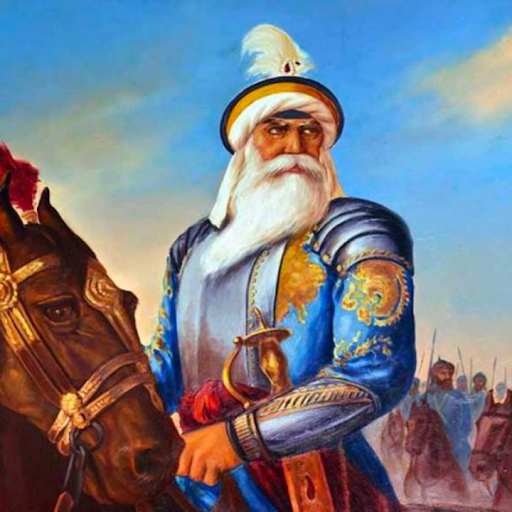
Nawab Kapur Singh was a major Sikh leader who led the community during the early-to-mid 18th century. He is considered one of the most respected, pivotal and legendary figures in the Sikh history from 1716 to 1753. Under his leadership, the numerous Sikh communities went through some of the darkest periods of its history, from 1716-1733, and 1735-1764. Banda Bahadur Singh dominated and motivated the Sikh community after Guru Gobind Singh until 1716. After Bada Bahadur Singh, Nawab Kapur Singh laid the foundations of the Sikh Empire and eventually overthrew the vicious Mughal Empire. He was the organizer of the Sikh Confederacy and its military force, Dal Khalsa. He is held in high regards by Sikhs.
Nawab Kapur Singh was born into the Virk clan of Jat Sikh in 1697 in village Kaloke, district Sheikhupura, Punjab ( Pakistan ). When he seized the village Faizullapur, near Amritsar, he renamed it Singhpura and made it his headquarters. He is thus, also known as Kapur Singh Faizullapuria, and the small principality he founded, as Faizullapuria or Singhpuria. In 1721, he underwent Amrit-initiation at a large gathering held at Amritsar on Baisakhi day, from Panj Piarey led by Bhai Mani Singh. In 1733, the Mughal government decided, at the insistence of Zakarya Khan, to revoke all repressive measures issued against the Sikhs and made an offer of a grant to them. The title of the Nawab was conferred upon their leader, with a Jagir consisting of three Parganas of Dipalpur, Kangaval, and Jhabval.
With the arrival of the peace with the Mughals, Sikhs returned to their homes and Kapur Singh undertook the task of consolidating the disintegrated fabric of the Sikh Jathas. These were merged into a single central fighting force ( The Dal ) and divided into two sections: the Buddha Dal and Taruna Dal. The Buddha Dal was the army of the veterans and it was entrusted with looking after the holy places, preaching the word of Gurus and inducting converts into the Khalsa Panth by holding baptismal ceremonies. The Taruna Dal became the army of the young, led by Hari Singh Dhillon. It was a more active division and its function was to fight in times of emergencies. Kapur Singh was the common link between these two wings. He was universally respected for his high character. His words were obeyed willingly and to receive baptism at his hands was counted as an act of merit.
Under Hari Singh’s leadership, the Taruna Dal rapidly grew in strength and soon numbered more than 12,000. To ensure efficient control, Nawab Kapur split it into five parts, each with a separate centre. Each part had its own banners and drum, and formed the nucleus of a separate political state. The territories conquered by these groups were entered in their respective papers at the Akal Takhat by Jassa Singh Ahluwalia. From these documents or misls, the principalities carved out by them came to know as Misls. Seven more groups were formed subsequently towards the close of the century, there were altogether twelve Sikh Misls ruling in Punjab.
Nawab Kapur Singh requested the community to relieve him of his office, due to his old age, and his suggestion, Jassa Singh Ahluwalia was chosen as supreme commander of the Dal Khalsa. Nawab Kapur Singh died on October 9, 1753 at Amritsar and was succeeded by his nephew Khushal Singh.
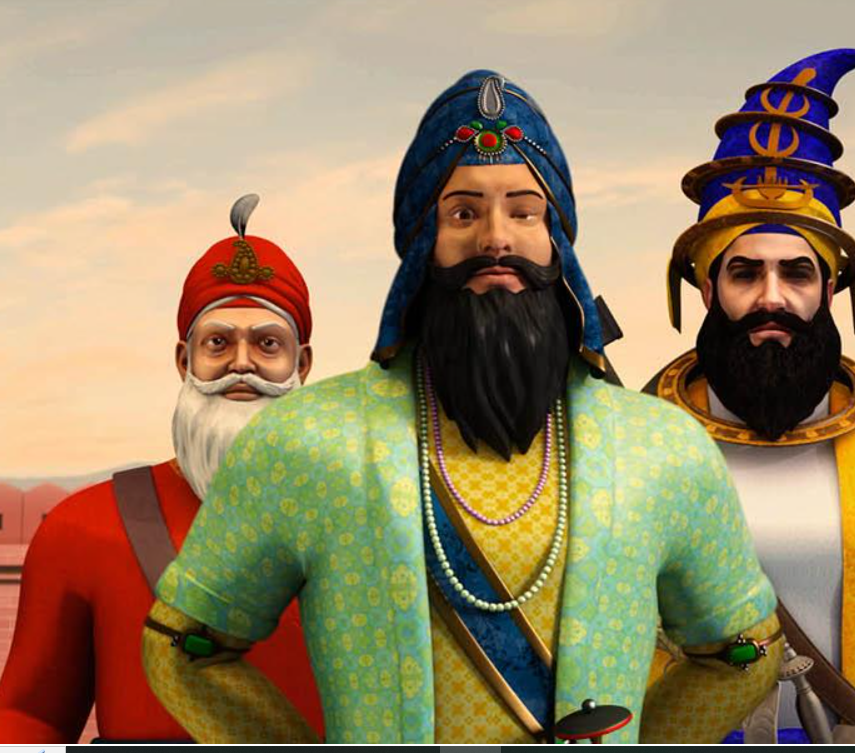
BRIEF HISTORY OF MAHARAJA RANJIT SINGH
Maharaja Ranjit Singh is referred to popularly as “Sher-e-Punjab” or the “the lion of Punjab”. He rose from an obscure Sikh chieftain of the local “MISL”; MISL refers to a unit or brigade of Sikh warriors of the time. At that time, there were 12 MISLs in the region. He then becomes the “Maharaja” of Punjab – ruling over a vast territory extending across Kashmir and Ladakh in the north, the Indus delta in the south, Baluchistan and Jamrud in the west and north-west and the river Sutlej in the east.
Born on 13TH November 1780, his father, Sardar Mahan Singh, was the chief of the Sukerchakia misl. Little is accurately known about his childhood- in fact, according to historians, there is only one “real” image of what he even looked like much later- (and that is from a painting by Emily Eden). The rest of the pictures are based on hearsay and folklore.
However, it is widely acknowledged that an attack of smallpox deprived him of his left eye in childhood. As a boy, he was sent to Bhagu Singh’s Dharamshala at Gujranwala to learn Gurumukhi, but he was more interested in warfare. He was pretty matchless in that art.
When his father died in 1790, the young Ranjit Singh was only ten years OLD. When most boys that age would be busy playing, Ranjit Singh found himself in the centre of the political scenario and became the heir to his father’s legacy.
The court historian Sohan Lal Suri in Umdat ut- Tawarikh describes an event about the courage of Ranjit Singh as a young boy of 13 years.
Once Ranjit Singh got separated from his companions and reached the outskirts of Ladewali, which then was under the rule of Nawab Hashmat khan Chatha. The Nawab, who opposed the Sukerchakia MISL, was out for a hunt. Seeing the young boy alone, he attacked him. In the confrontation, Ranjit Singh not only single-handedly managed to ward off the attack but chopped the Nawab’s head off. The Chatthas never opposed him ever again.
In 1795 at the age of 15, Maharaja Ranjit Singh married Mehtab Kaur, the daughter of Rani Sada Kaur, the widow of the chief of the Kanhiyas misl, Sardar Gurbaksh Singh. Rani Sada Kaur handled Maharaja Ranjit Singh’s administrative affairs for many years.
It’s important to know that during the period from about 1750 to about 1810, Afghan invaders had been attacking India. Several times. Ahmad Shah Durrani, who WAS ruling Afghanistan, had shot India nine times.
In 1796 Shah Zaman-grandson of Ahmad Shah Abdali entered Punjab – no ruler in Punjab was in a position to oppose him or his 30,000 troops and heavy artillery.
Maharaja Ranjit Singh realized the need for joint resistance and approached several Sikh chiefs who accepted his leadership. The collective army under the supervision of Maharaja Ranjit Singh forced Shah Zaman to return to Afghanistan. Maharaja Ranjit Singh’s fame as a courageous leader spread.
When Shah Zaman left Lahore, three Sardars of the Bhangi Misl re-occupied it. The Prominent citizens of Lahore were aware of the weaknesses of their Bhangi rulers. They invited Maharaja Ranjit Singh to take over Lahore. Maharaja Ranjit Singh planned the attack with his mother-in-law Sada Kaur. The Two jointly moved towards Lahore with their armies. And without much resistance, the city was wrested away from the Bhangi Sardars.
Maharaja Ranjit Singh’s rise to power as the leader of the Sikhs was evident by 1801, and he was invested with the title “Maharaja”. The inauguration was conducted by Baba Sahib Singh Bedi, a spiritual patriarch of the Sikhs, on Baisakhi day, establishing him as the leader of the Sikhs. However, Maharaja Ranjit Singh, in his modesty, refused to wear any emblems of royalty. Even the government seal made no personal reference to him. It was of “Sarkar Khalsa Ji” (of the people). His government, too, was known as ‘Sarkar-i-Khalsa’. He is reported to have preferred the simple title of“Singh Sahib” ” to any grandiose soubriquets. The coins issued by him bore the name of Shri Guru Nanak Ji. He remained faithful to the guidelines of the last Guru. He was indeed the leader of the Khalsa as opposed to becoming an autocratic ruler. In 1802, Maharaja Ranjit Singh was again requested by the citizens to save the city of Amritsar– the most sacred city of the Sikhs from the Bhangi Sardars. Once again, Maharaja Ranjit Singh took the Fort of the Bhangies and named itGobindgarh Fort -after the name of the tenth Sikh Guru –Shri Guru Gobind Singh Ji.
He also captured the Zamzama Cannon, an enormous cannon of Asia at the time. After winning the Gobindgarh Fort, Maharaja Ranjit Singh went to Harmandir Sahib for darshan as a thanksgiving. He vowed to cover the temple with gold, turning the revered Harmandir Sahib Gurudwara into the “Golden Temple.”
After Winning the Amritsar and Lahore, Maharaja Ranjit Singh turned his ambitions in other directions.
The British soon became vary of Maharaja Ranjit Singh’s growing power. On 1 January 1806, Maharaja Ranjit Singh signed a treaty with the East India Company. The Company agreed that it would not even attempt to cross the Sutlej River into the Sikh territory. Maharaja Ranjit Singh agreed that his Sikh forces would not expand south of the Sutlej River.
However, Maharaja Ranjit Singh was busy expanding west and northwards.
By 1807, Maharaja Ranjit Singh’s forces attacked Misl of Kasur and, after a month of fierce fighting, defeated the Afghan chief Qutb-ud-Din- allowing Maharaja Ranjit Singh to expand his empire towards Afghanistan.
In December 1809, the aid Raja Sansar Chand of Kangra asked for his help, and after defeating the Ghurka forces, Maharaja Ranjit Singh acquired Kangra.
In 1810, he annexed Multan after a long siege.
However, as history turned, infighting broke into the family of the Durranis, with brothers killing, blinding and overthrowing each other in 1812; one of the brothers was Shah Shuja. He was dethroned by another stepbrother and was trying to flee Kabul with his entourage when the British captured him and sent him to Kashmir to his brother, where he was imprisoned!
His wife, Wafa Begum, then came to Maharaja Ranjit Singh to ask for help. Thus, the “Afghan royal family- the very same people who had been invading and looting Punjab for years, arrived at Maharaja Ranjit Singh’s doorstep pleading for help” in getting the release of Shah Shuja from the clutches of the British.
Maharaja Ranjit Singh obliged, and it was then that he acquired the Koh-i-Noor – In exchange for helping Shah Shuja get back the throne of Afghanistan.
In 1819, he successfully annexed Srinagar and Kashmir by defeating the Afghan Sunni Muslim rulers. His rule thus now spread to the Jhelum valley in the north beyond the foothills of the Himalayas.
By 1820 he had consolidated his rule over the whole of Punjab between the Sutlej and Indus rivers.
Early in his career, he observed how the British troops had defeated Indian forces that were superior in numbers with their discipline and training. Their well-drilled infantry and artillery were very impressive. But Maharaja Ranjit Singh did not trust the British. Instead, he used the French and Italian generals to modernize his army- many of these Generals had served under Napoleon. Accordingly, he restructured and trained his army.
It is important to note that Maharaja Ranjit Singh was a considerable secularist. His armies were composed of Sikhs, Muslims and Hindus. Even his commanders, as well as his ministers, were from different religious communities. The Maharaja never forced Sikhism on his subjects. This was in sharp contrast with the ethnic and religious cleansing of past Muslim rulers – Afghani or Mughal.
His modernized artillery and infantry army fought very well in campaigns in the North-West. Maharaja Ranjit Singh spent the following years fighting the Afghans, driving them out of western Punjab. In 1823 a treaty brought the province of Peshawar under his rule. This was the first time that non-Muslims ruled Pashtuns. From a historical perspective, this event was a landmark event. “For more than a thousand years’ invaders had come down from the Khyber Pass and ruled eastern lands. Maharaja Ranjit Singh reversed this trend.”
But by 1834, Mohammed Azim Khan again attempted an attack on Peshawar with an army of 25,000 composed of Khattak and Yasufzai tribe members. The Maharaja defeated the forces.
In 1837, the Battle of Jamrud became the last confrontation between the Sikhs led by him and the Afghans led by Dost Muhammad Khan. His victory over a succession of Afghan warlords culminated in a victory march past Kabul in 1838.
Shortly afterwards, Maharaja Ranjit Singh was taken ill, and he died at Lahore in June 1839—almost exactly 40 years after he had entered the city as a conqueror. In a little more than six years after his death, the Sikh state he had created collapsed because of the internal strife prodded by the British.
However, this great Maharaja is well known and respected as the creator of Punjab.
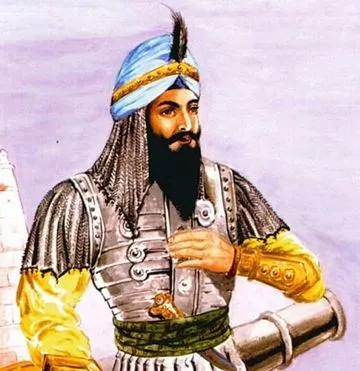
About Hari Singh Nalwa
Battle of Peshawar (1818): Sikh army under Nalwa won the Battle of Peshawar and was asked to be stationed there. Nalwa took control over Jamrud in 1837, a fort at the entryway to Afghanistan through Khyber Pass.
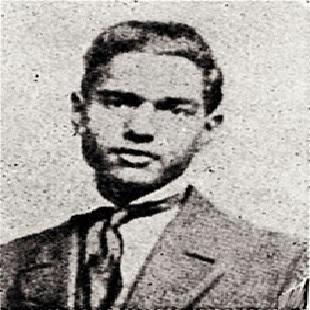
Kartar Singh was born on 24 May 1896 in village Sarabha of district Ludhiana. His father’s name was Mangal Singh and his mother was Sahib Kaur. He was from a well-heeled family and far ahead of their co-villagers in respect of land ownership, education, and standard of living. In childhood, his parents passed away and he was raised by his grandfather. With him, he lived in Odisha and studied at Ravenshaw College.
Thousands of Punjabis had moved to foreign countries in search of greener pastures by the first decade of the twentieth century. Sarabha arrived in San Francisco in July 1912 with the intention of studying electrical engineering at the University of California, Berkley. His time in California altered the course of his life. Sarabha, like many other immigrants, was working as a labourer in California at the time. It was there that he realized the humiliation of being from a colonised country. There, Indians were referred to as Hindu slaves. Indians in America frequently gathered to discuss their problems and share their grief. Sarabha became agitated about British rule as a result of such associations and exchanges. Americans’ hostility toward immigrants in general, and immigrants from colonies in particular, was palpable. The Indian immigrants who settled on Canada’s and America’s Pacific coasts vowed to expel the British from India, and this thought transformed them into uncompromising rebels determined to ‘do or die.’
The Ghadar Party was founded in Oregon in 1913. This revolutionary party was founded by Sohan Singh Bhakna, Pt. Kanshi Ram, Harnam Singh Tundilat, Lala Har Dayal, and others. It was an Indian organisation that sought to overthrow British rule in India through an armed uprising. The organization’s headquarters were in San Francisco. Sarabha became more involved in it.
The Ghadar was initially published on cyclostyle machine in Urdu only. The Gurmukhi edition of the paper was also published in January 1914. With the increasing demand for the Ghadar, the paper’s management established its own printing press at 5 Wood Street. To begin, Har Dayal was the editor, and Kartar Singh was the subeditor. Kartar Singh’s responsibilities included editing the Urdu version of Ghadar, translating Urdu material into the Gurmukhi script, and working on the printing press.
In the Komagata Maru episode, the Ghadar Party President instructed Sarabha to stock his shop with pistols and cartridges. Kartar Singh Sarabha had secretly delivered 100 pistols and ammunition on board on 21 July 1914. On 28 July 1914, WWI broke out. The Ghadarites saw it as an opportunity to launch an attack on the British. They intended to relocate their base to India in order to organise the people there. Kartar Singh on 14 September arrived in Colombo (Ceylon) and travelled to Punjab.
He arrived in Punjab and convened numerous ghadarite meetings. On behalf of the party, he also contacted troops in Ferozepur, Lahore, Rawalpindi, and other cantonments. He established contact with Bengal revolutionaries and invited Ras Bihari Bose to lead this movement in Punjab. When Bose arrived, the planning for an uprising began. The date was set for 21 February 1915, but it was later pushed back to 19 February. Kirpal Singh, a returnee from abroad, was working as a police spy, and thus the entire plan was revealed to British authorities. The British clamped down on the activists and arrested them before the Ghadarites could stage an uprising.
Kartar Singh, Jagat Singh, and Harnam Singh Tundilat took the Frontier Mail from Lahore to Peshawar on 20 February to reach the Tribal Region across the border. After disembarking in Peshawar, they trekked to their remote destination. Here, Sarabha made the decision to return to Punjab and restart their struggle. On 2 March 1915, they arrived at a remount farm in Chak No. 5 of Shahpur (Sargodha) district to stay with one Rajindar Singh, a military pensioner and an acquaintance of Jagat Singh, himself an ex-soldier. Rajindar Singh, on the other hand, arrested them with the assistance of Risaldar Ganda Singh of Gandiwind village.
All three were apprehended and transported to the Lahore Central Jail, where they were charged in the First Lahore Conspiracy Case. The trial began on April 26, 1915, under the Defence of India Act 1914, and the verdict was delivered on 13 September 1915. He was charged under sections 121, 121A, and 131 of the IPC. In court, Kartar Singh Sarabha was unapologetic and proudly stated his duty of mobilizing the people against the British. His unwavering patriotism turned the judges against him. Kartar Singh was deemed the most dangerous of the rebels by the court.” He is very proud of the crimes he committed,” the judges said. He does not deserve mercy and should be executed.” Sarabha and his seven fellow countrymen were executed in the Lahore Central Jail on 16 November 1915.
Kartar Singh Sarabha was hanged by British authorities when he was only nineteen years old. His bravery, activism, and dedication to the cause of Indian freedom were heroic. He became a source of inspiration and courage for later freedom fighters. This is especially true for Bhagat Singh, who saw Kartar Singh Sarabha as an idol.
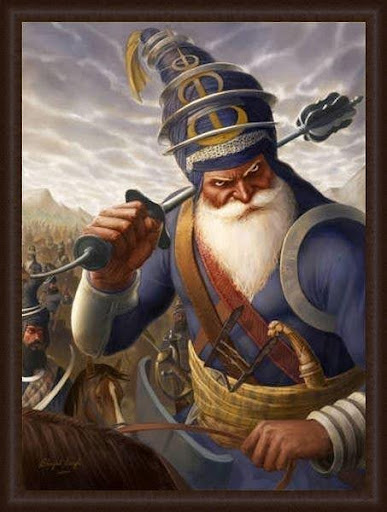
There were many warriors who kept high the symbol of unflinching will of Khalsa. There were yet many who were went to Khalsa for personal glory, to win estates, etc. An example whose only and only purpose was to serve Khalsa and to keep the Nishan Sahib flying high was Nihang Akali Phula Singh.
Nihang, the word is derived from Persian which means ‘crocodile’. Nihangs, were created by Dasam Pita Guru Gobind Singh Ji, to serve the Khalsa Community. Nihangs do not marry, and their only purpose is to live and die for Khalsa.
Many historians call Nihangs as “Suicide squads”, this is utterly wrong, suicide is a sin in Sikhism. Nihangs only purpose is to fight for the Khalsa’s defense. Akali Phula Singh was born January 14th 1761 in a Village named Shinh, in Amritsar.
Akali Phula Singh joined an order of Nihangs at Sri Harmandir Sahib at an early age where he got all the martial training. Later, when he was 18 years old he shifted to the fort of Gobindgarh became a leader of one of the band of fighters who formed a squad of Sikh army.
When Maharaja Ranjit Singh consolidated Amritsar into his empire by defeating number of families who were ruling this city, Akali Phula Singh, joined Maharaja Ranjit Singh in this noble cause. Due to this very reason he was made the mukh sewadar of the Akal Takht in 1807.
Akali Phula Singh was a born leader, outspoken such that he would even spoke to Ranjit Singh of his problems. When Ranjit Singh married to a Muslim woman, named Moran of Lahore, Akali Phula Singh, as he was the mukh sewadar of Akal Takht declared that Maharaja Ranjit Singh is not a Sikh anymore and is a Tankhaiya which means out of Sikhism.
Akali Phula Singh ordered the defendant to be at Golden temple before the community. Ranjit Singh came and admitted that he had made a mistake. Akali Phula Singh ordered him 50 lashes for Maharaja Ranjit Singh right there. Ranjit Singh took off his shirt and bowed down to receive his punishment, at such Akali Phula Singh asked Community (Sadh Sangat) to forgive the Maharaja who has bowed down in front of the Sadh Sangat for this mistake. And thus Maharaja was pardoned, but not before he promised that he will not marry again.
There is another interesting incident of this times, reason which made Maharaja to upgrade his forces to European style. On the day of Muharram on February 25, 1809 A.D., Shia Muslims of British army under Metcaulf, a British general who was visiting Amritsar along with his forces, decided to take out a procession in the streets of Amritsar, even though in Amritsar among Muslims, majority were Sunni Muslims.
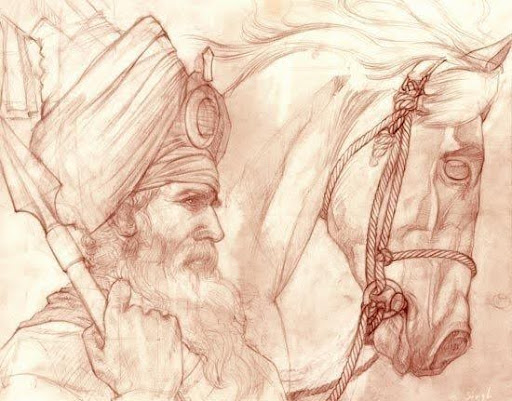
It also happened to be the day of Holi, when Nihangs were celebrating Hola Mohalla along with their celebrated leader and mukh sewadar of Akal Takht, Akali Phula Singh. The Shia procession wended its way through the streets of Amritsar, beating their breasts to the chants of “Hasan, Hussein, Ali” They came in front of Sri Harmandir Sahib, where the Akalis were in prayer.
The Akalis remonstrated with the processionists to go elsewhere. Arguments led to scuffle and Shia Seopys under General Metcaulfe came to a head on collision with Akalis. It is not known who were the aggressors. Even Metcalfe was doubtful and conceded that the first shot was probably fired by one of his Shia escorts (Metcalfe No. 72, of 7.3.1809).
There were about 50 casualties on both sides. In the end this riot stopped when Ranjit Singh who happened to be in the city personally came forwarded and helped to quell the riot. He also went to Metcalfe and apologized for this riot.
Ranjit Singh was impressed by the discipline shown by the Shia Sepoys under Metcalfe and Ranjit Singh promptly decided to Europeanize his Army.
Akali Phula Singh was against Europeanizing the Khalsa Forces, he believe more in the fighting qualities of Khalsa blessed by Guru Gobind Singh.
Ranjit Singh was a statesman who foresaw that he could utilize a well disciplined army to subdue the whole of Punjab and to face British.
In the same year 1809, at Ropar, Maharaja Ranjit Singh signed a treaty with British to make Satluj a permanent border between the Sarkar Khalsa and British. Akali Phula Singh wanted Maharaja to tear up the treaty, he even threat to quit.
Maharaja Ranjit Singh explained him that first they will subdue whole of Punjab, and then later they will confront British. This treaty was to make the permanent boundries between Sarkar Khalsa and British territory. Satluj was made a border.
Akali Phula Singh and his command helped Maharaja in the campaigns of Kasur, Multan, and all over Punjab. Nihangs under his command at Multan surpass all bravery when they bowed down one by one to support one side of a Gun to be used to break through the fort and attained martyrdom. By 1822 all the regiments of Sarkar Khalsa were Europeanized. Akali Phula Singh was given new arms as well as trained of new tactics by the French General Ventura.
Maharaja Ranjit Singh decided to turn towards North West Frontier province. In 1815 AD, Maharaja attacked NWFP and levied tribute on number of principalities. Since 10 centuries Pathans and tribesman had plundered Punjab and India, this was the first time that any Punjabi took the battle to their homes. Then in 1823, the Governor of Peshawar did not give tribute to Maharaja Ranjit Singh. Sarkar Khalsa forces led by Akali Phula Singh, General Hari Singh Nalua, Fateh Singh Attariwala, and other General of Sarkar Khalsa marched towards Peshawar.
Battle of Naushera in 1823 AD, in which thousands were killed was fought with the tribes of Yusufzais, Khattaks and Afridi tribes of Pathans. Prince Sher Singh and Hari Singh Nalua led the advance columns early in 1823. They spanned the river Attock by the means of a pontoon bridge and occupied the fort of Jehangiria. Then Maharaja Ranjit Singh along with Akali Phula Singh led the rest of forces upto the Eastern bank of River Attock, but by this time. Tribals had destroyed the pontoon bridge and had besieged Prince Sher Singh and Hari Singh Nalua in the fort. Hastingly, Maharaja Ranjit Singh, who had crossed this river umpteen number of times, decided to cross it and came to the rescue of his son and Hari Singh Nalua just in time. Khattaks and Yusufzais were pushed back and they entrenched themselves one an eminence called Pir Sabak or Tibbi Tiri on the plains between Jehangiria and Peshawar. The main Afghan force under Azim Khan’s brother was separated from the tribal ghazis by a small but swift-running stream, the Landai.
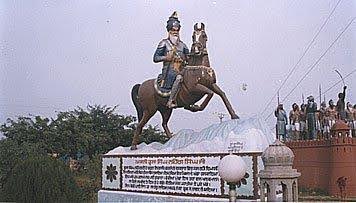
The Khalsa Artillery, led by Mian Ghausa bypassed the tribesmen, and reached the bank of Landai, and trained its heavy guns on the opposite bank. Azim Khan made a dash from Peshawar and joined the forces of Afghans on the opposite Bank of Landai. He could not cross the stream due to the heavy bombardment by Khalsa forces from this side of Landai. On the other front of war, Sarkar Khalsa launched an offensive at Pir Sabak Hill. This war was not evenly matched, but Khalsa was outnumbered by the sheer number of Afghans, Khalsa forces made up this by their disciplined and well trained army.
Tribal forces fought desperately but were overcome by Sarkar Khalsa’s Gurkhas and Mussalman Najibs. Then Akali Phula Singh and his nihangs moved up to give them the coup de grace . They drove the Khattaks and Yusufzais before them, four thousand Afghans were left dead on the field. Sarkar Khalsa’s fatalities were in hundreds, but still this was too much, because in those 500 or so soldiers there was one who equaled 125,000, Akali Phula Singh. While pursuing Afghanis, Akali Phula Singh’s horse was shot under him. He took an elephant and pressed on. The error cost him his life. Afghanis saw the man who has so often humbled them, and trained their muskets on him. Phula Singh was riddled with bullets. He collapsed in his howdah, exhorting nihangs with the last breath of his body not to give way. Mohammed Azim Khan retreated to Peshawar but was too ashamed to face his people and thus he returned to Afghanistan and died soon.
Even though the Sarkar Khalsa paid a heavy price in losing a great warrior like Akali Phula Singh, it was a crushing defeat for the Afghans, and it convinced the Pathan tribesmen of the superiority of Punjabi soldiers. Three days later Maharaja entered Peshawar at the head of his victorious troops. The citizens welcomed him and paid homage with nazaranas.
More on Akali Phula Singh
The great Sikh General, Jathedar Akali Phula Singh, was born in 1761. His father Ishar Singh was fatally wounded during the great massacre of Sikhs (Wada Ghalughara) in 1762. Before his death he charged Bhai Narain Singh of Misl Shaheedan with the responsibility of raising his infant son.
Akali Ji, by the age of ten, could recite Nitnem and other Gurbani hymns from memory. At Anandpur Sahib, he always kept himself busy doing sewa or reading Gurbani, and he became very popular with the sangat. Because of his scholastic attitude and commitment to Panthic welfare, he was made the leader (Jathedar) of the Misl after the death of Bhai Narain Singh. In 1800, he came to Amritsar and made the Mahants improve the management of the Gurdwaras. The major credit for extending the boundaries of the Sikh Raj goes to Akali Ji, the legendary general of the Sikhs.
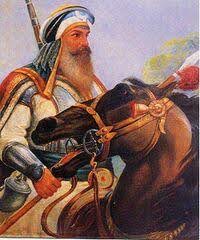
Baghel Singh Dhaliwal (1730? – 1802) was an important military general in turbulent times of Eighteenth century Punjab. He was born in village Jhabal, about 20 km outside of Amritsar city and grew up to become leader of the Karor Singhia Sikh fighting order or Misl. Several dozen Misls had sprung up in country side, which filled the power vacuum after decline of once formidable Mughal Empire.His Native village was Rauke Kalan in Moga District
Expansion
After establishing his military grip over part of the cis-Sutlej Punjab, Baghel Singh Dhaliwal began to raid and loot parts of trans-Yamuna territories like Meerut, Saharanpur, Shahdra and Awadh, at the behest of his Afghan allies such as Zabita Khan and Ghulam Qadir.
Attack on Delhi
In March 1776, Baghel Singh’s forces were defeated by imperial Army of Mughal emperor, Shah Alam II near Muzaffarnagar. The Sikh forces had joined with those of Zabita Khan to march on Delhi but found the Mughals too strong. Further afield at Panipat, they tried joining battle but after several hours of hard struggle had to sue for peace terms. In late 1778, The Sikhs revolted and defeated the Mughal faujdar of Sirhind, Maulah Ahmad Dad, killing him and driving back Mughal forces. The Sikhs then raided further east all the way up to Delhi whose suburbs were sacked.
Battle of Ghanaur
Angered by the impertinence of vassals, the Mughal emperor Shah Alam II sent a Mughal army of 20,000 soldiers to chastise the Sikhs. A year earlier these same had begged for and been granted mercy by the emperor. The Mughal force was commanded by the wazir Nawab Majad ud Daula under the banner of the crown prince. What is less well known was that it was the wazir himself who had encouraged the Sikhs to carry out these raids in the hope of disgracing his rival Mirza Najaf Khan. The Mughals reached Karnal and there the wazir opened negotiations with the Sikhs in the hope of marching on Delhi together. Very much like what Mir Jaffer had done to his commander Siraj ud Daula at Plassey, the wazir moved his troops — the main fighting force — out from the imperial camp. The resulting battle led to a fighting retreat back to Mughal lines. Thus Baghel Singh’s forces defeated an estimated 6,000 to 7,000 strong Mughal army in the battle of Ghanaur, near Patiala city.
It is unclear why Sikh sources believe the former battle to be a huge success since the main Mughal force was already out of the battle. The defeat of the small Mughal force was nevertheless a matter of prestige for the Sikhs. When Mirza Najaf Khan took the field in early 1779 the Mughals dictated peace terms to the Sikhs. Some Sikh sources claim that the Mughal forces at Ghanaur numbered 100,000 but this is unlikely since the whole of the Mughal strength in those twilight years of Mughal rule numbered 85,000 to 90,000 and remained more or less intact till the death of their commander in chief Mirza Najaf Khan in April 1782.
Rise of Sikh Power
The Sikhs however remained a source of trouble throughout the late 18th century, frequently supported by treasonous elements within the mughal government or by enemies. With the Mirza dead, Baghel Singh Dhaliwal was able to lead the Sikhs all the way to Delhi and in 1783 plundered the imperial capital, a move that alarmed the British as well as the Marhattas. The 1783 plunder of Delhi announced to the world that the Sikhs had arrived. A new power in the east was awakening.
He signed a treaty of friendship with the powerful Maratha Sardar Mahadji Sindhia but in concert with the other Sikh robbers of the cis Sutlej Malwa region proved traitor at each and every opportunity only being afraid to face the disciplined regiments of the Marathas in open battle.
Despite the treaty with the Marathas the same Sikhs of Malwa very quickly joined the British in the second Anglo Maratha war of 1803-1805
Baghel Singh established an octroi post in Chandni Chowk outside the Red Fort in Mughal capital Delhi in March 1783.
Baghel Singh Dhaliwal is credited with establishment of following Gurudwaras or Sikh Temples in Delhi:
Baghel Singh Dhaliwal died around 1802 at Hariana, near Hoshiarpur.
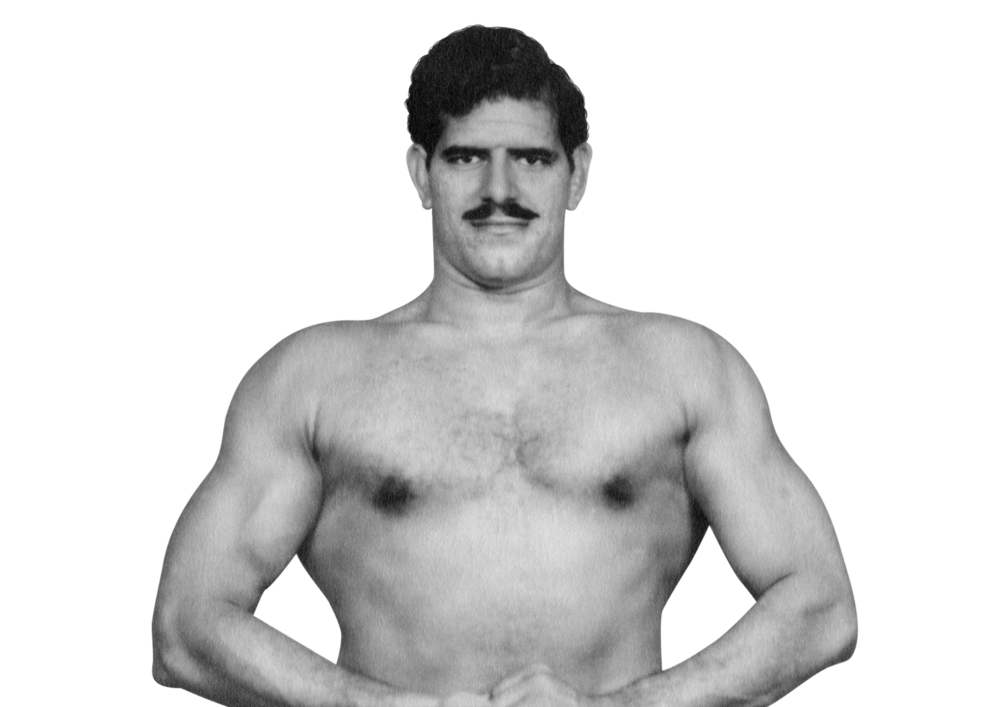
Dara Singh Randhawa (born Deedar Singh Randhawa; 19 November 1928 – 12 July 2012) was an Indian professional wrestler, actor, director and politician. He started acting in 1952 and was the first sportsman to be nominated to the Rajya Sabha (upper house) of India. He worked as Hindi and Punjabi film producer, director and writer, and he acted in films and television. His role of Hanuman in the film Bajrangbali (1976) and in Ramanand Sagar‘s Ramayan made him popular. Singh was inducted into the Legacy wing of the WWE Hall of Fame Class of 2018.
Early life
Singh was born in a Jat Sikh family as Deedar Singh Randhawa to Surat Singh Randawa and Balwant Kaur on 19 November 1928 in the village of Dharmuchak in the Majha area of the Punjab region of India. At the time, it was still under British Raj colonial rule.
Career
Professional wrestling
Singh wrestling King Kong at JWA in 1955
He came to Singapore in 1947, where he worked in a drum-manufacturing mill and began his wrestling training under Harnam Singh in the Great World Stadium. As an adult he was 6 feet 2 inches (1.88 m) tall, weighed 127 kilograms (280 lb) and had a chest measurement of 53 inches (130 cm). Due to his physique, he was encouraged to take up pehlwani, a traditional Indian style of wrestling, in which he trained for several years. After switching to professional wrestling, he competed around the world with opponents such as Bill Verna, Firpo Zbyszko, John Da Silva, Rikidōzan, Danny Lynch and Ski Hi Lee. His flooring of King Kong is still remembered. He is credited to have remained undefeated in a professional wrestling bout.
In 1951, Dara Singh lost a traditional city-duel match in Greco-Roman style against Brahmdev Mishra of Gorakhpur in a stadium located at Dahrmtalla maidan Culcutta.
In 1954, Dara competed in the Rustam-e-Hind (Champion of India) tournament where he won the final by defeating Tiger Joginder Singh and received a silver cup from Maharaja Hari Singh. In 1959, he won the Commonwealth Championship by defeating George Gordienko at Calcutta. On 29 May 1968 in Bombay, his victory over Lou Thesz earned him the World championship. According to Thesz, Singh was “an authentic wrestler, was superbly conditioned” and had no problem losing to the latter. His last tournament, where he announced his retirement, was held in Delhi in June 1983.
Films and television
Singh left his village for Singapore in 1948. He started his career as an actor in 1952 with Sangdil. He was a stunt film actor for many years and played his first lead role in Babubhai Mistry‘s film King Kong (1962). From around 1963, he partnered often with Mumtaz, with whom he performed in 16 Hindi films. The couple became the highest-paid B-grade actors, with Singh receiving nearly four lakh rupees per film.
He then went on to do television in the late 1980s, where he played the role of Hanuman in the television adaptation of the Hindu epic Ramayan. He also had roles in numerous films, such as Veer Bheem Sen and Ramayan, and in other television serials. He starred as Bhima in various Mahabharata movies, besides also playing Balram, he also starred as Shiva in various theological movies.
His last Hindi movie was Jab We Met and the last Punjabi movie released before his illness was Dil Apna Punjabi. He acted in National Award-winning film Main Maa Punjab Dee directed by Balwant Singh Dullat. He directed seven Punjabi films including Sawa Lakh Se Ek Ladaun, Nanak Dukhiya Sub Sansar, Dhyanu Bhagat and Rab Dian Rakhan. He also directed two films in Hindi; Bhakti Mein Shakti and Rustom (1982), which were produced and directed under the banner “Dara Film” which he set up in 1970. Singh acted as himself in the 1985 Malayalam film Mutharamkunnu P.O..
Dara Studio
Singh was the owner of Dara Studio at Phase 6, Mohali City, District SAS Nagar, Punjab. Dara Film Studio was founded in 1978. The studio was operational from 1980 as a film studio.
Politics
Singh joined the Bharatiya Janata Party in January 1998. He became the first sportsperson to be nominated to the Rajya Sabha – the upper house of the Parliament of India. He served in that role between 2003 and 2009. He was also president of the Jat Mahasabha.
Personal life
Singh married twice. He had three sons and three daughters, including Vindu Dara Singh. His brother Randhawa was also a wrestler and actor.
Death
Singh was admitted into Kokilaben Dhirubhai Ambani Hospital on 7 July 2012 following a massive heart attack. Two days later, it was confirmed that he had brain damage due to the lack of blood flow. He was discharged from hospital on 11 July 2012, citing that nothing can be done to prolong life, and died the next day at his home in Mumbai. He was cremated at Juhu crematorium.
Awards and recognition
In 1996, Singh was inducted into the Wrestling Observer Newsletter Hall of Fame. He was ranked 94 out of 100 wrestlers for Dave Meltzer‘s Top 100 Wrestlers of all time in 2002. In 2016, Dara was included in the list India’s top wrestlers of all time. On 7 April 2018, WWE inducted him in WWE Hall of Fame Legacy class of 2018.
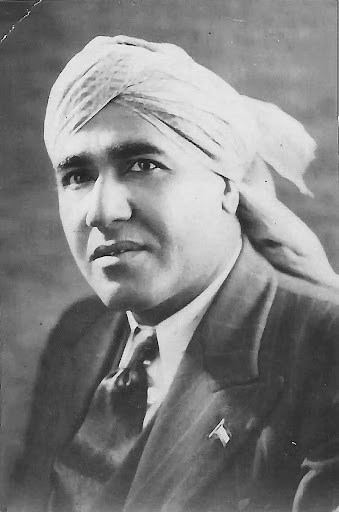
Shaheed Udham Singh Biography: Birth, Death, Jallianwala Bagh Massacre, Assassination of O’Dwyer and More About Shaheed-i-Azam
Shaheed Udham Singh Biography: Udham Singh was a Freedom Fighter who belonged to the Gadar Party. He killed Michael O’Dwyer, former lieutenant governor of the Punjab, India in London to avenge the Jallianwala Bagh massacre. He was hanged to death on July 31, 1940, for committing a murder. Read the below article to know more about his birth, early life, the assassination of O’Dyer and more.
It is rightly said, “For every O’Dwyer, there is a Shaheed Udham Singh.”
Udham Singh, a Freedom Fighter who belonged to the Gadar Party was hanged to death on July 31, 1940, after he was found guilty of committing murder. Shaheed Udham Singh killed Michael O’Dwyer, former lieutenant governor of Punjab, India in London to avenge the Jallianwala Bagh massacre in Amritsar.
In October 1995, Udham Singh Nagar, a district in Uttarakhand, was named after him by the then Chief Minister of undivided Uttar Pradesh, Mayawati.
Through this article, let us dive deep into the life of Shaheed Udham Singh, the Jallianwala Bagh massacre, the assassination of O’Dwyer, and his ashes at the Jallianwala Bagh.
Udham Singh: Birth and Early Life
Udham Singh was born on December 26, 1899, at Sunam, Sangrur district of Punjab, India to Sardar Tehal Singh Jammu and Mata Narain Kaur. His father was a farmer and also worked as the railway crossing watchman in the village of Upali.
After the death of his father, Udham Singh and his elder brother Mukta Singh was raised by Central Khalsa Orphanage Putlighar in Amritsar. In the year 1918, Udham Singh passed his Matriculation Examination and left the orphanage in the year 1919.
Udham Singh: Jallianwala Bagh Massacre
On April 10, 1919, leaders of the Indian National Congress were arrested under the Rowlatt Act. This, in turn, led to a widespread protest at Jallianwala Bagh on April 13, 1919. More than 20,000 unarmed people were a part of the protest. At that time, Udham Singh and his friends from the orphanage were serving water to the protestors. General O’Dwyer along with his troops entered Jallianwala Bagh, blocked the main entrance, and took up the position on a raised bank and without any warning open fired on the crowd for about 10 minutes until the ammunition supply was almost exhausted.
After this incident, Udham Singh was involved in revolutionary politics and was influenced by Freedom Fighter Bhagat Singh. In the year 1924, Udham Singh joined the Ghadar Party to overthrow British Rule in India and organised Indians overseas for the same. In 1927, after receiving orders from Bhagat Singh, Udham Singh received to India, bringing 25 associates and ammunition. However, he was soon arrested over the 25 associates. At the time of his arrest, evolvers, ammunition and copies of a prohibited Ghadar Party paper called “Ghadr-i-Gunj” were confiscated, which led him to five years in prison.
Udham Singh: Assassination of O’Dwyer
In 1931, Udham Singh was released from the prison, but his movements were monitored by the Punjab Police. However, he was able to dodge the Punjab Police and reached Germany via Kashmir. In the year 1935, he reached London and was employed as an engineer. He made plans to kill O’Dwyer, who was responsible for killing hundreds of peaceful protestors at the Jalianwala Bagh.
On March 13, 1940, Michael O’Dwyer was scheduled to speak at a joint meeting of the East India Association and the Central Asian Society (at present, Royal Society for Asian Affairs) at Caxton Hall, London. Udham Singh concealed a revolver in his Jacket’s pocket and entered the meeting area. After the meeting concluded, Udham Singh started moving towards the stage and shot O’Dwyer twice, killing him instantly. Apart from O’Dwyer, others injured in the event were– Louis Dane, Lawrence Dundas, 2nd Marquess of Zetland, and Charles Cochrane-Baillie, 2nd Baron Lamington. Udham Singh was immediately arrested by the officials for killing O’Dwyer.
Udham Singh: Trial and Execution
After almost twenty days of the Assassination of Michael O’Dwyer, on April 1, 1940, Udham Singh faced formal charges and was remanded in custody at Brixton Prison.
As per Udham Singh, after he assassinated O’Dwyer, ‘ I did it because I had a grudge against him. He deserved it. I don’t belong to society or anything else. I don’t care. I don’t mind dying. What is the use of waiting until you get old? Is Zetland dead? He ought to be. I put two into him? I bought the revolver from a soldier in a public house. My parents died when I was three or four. Only one dead? I thought I could get more.’
While in custody at Brixton, Udham Singh called himself ‘Ram Mohammad Singh Azad’, with the first three words representing three major religions of Punjab (Hindu, Muslim and Sikh) and the last word representing his anti-colonial sentiment. The word Azad means ‘Free’.
In the prison, awaiting his trial, Singh went on a hunger strike which was broken on the 42nd day after he was force-fed by the prison authorities. On June 4, 1940, Singh’s trial commenced at the Central Criminal Court, Old Bailey, before Justice Atkinson, with V.K. Krishna Menon and St John Hutchinson representing him. G. B. McClure was the prosecuting barrister. He was inquired about his motivation behind the assassination of O’Dwyer, to which he replied, ‘I did it because I had a grudge against him. He deserved it. He was the real culprit. He wanted to crush the spirit of my people, so I have crushed him. For the full 21 years, I have been trying to seek vengeance. I am happy that I have done the job. I am not scared of death. I am dying for my country. I have seen my people starving in India under British rule. I have protested against this, it was my duty. What greater honour could be bestowed on me than death for the sake of my motherland?’
He was convicted of murder and was sentenced to death. On July 31, 1940, he was hanged at Pentonville Prison. On this day every year, i.e., July 31, Singh is paid tribute by various organizations.
Udham Singh: Remains at Jallianwala Bagh
On the request of the then MLA Sadhu Singh Thind, Singh’s mortal remains were exhumed and repatriated to India in the year 1974. The casket was received by the then Prime Minister Indira Gandhi, the then President Shankar Dayal Sharma and the 7th President of India, Zail Singh.
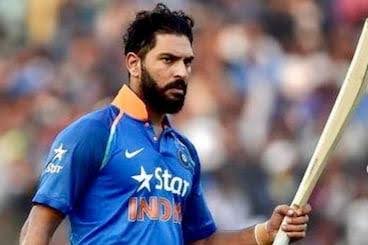
Yuvraj Singh (born 12 December 1981) is a former Indian international cricketer who played in all formats of the game. He was an all-rounder who batted left-handed in the middle order and bowled slow left-arm orthodox. He has won 7 Player of the Series awards in One Day International (ODI) cricket, which is a joint 3rd highest by an Indian cricketer, shared with former Indian captain Sourav Ganguly. He is the son of former Indian fast bowler and actor Yograj Singh.
Yuvraj was a member of the Indian cricket team in ODIs from 2000 to 2017 and played his first Test match in October 2003. He was the vice-captain of the Indian ODI team between 2007 and 2008. In a match against England at the 2007 World Twenty20, he famously hit six sixes in one over bowled by Stuart Broad —a feat performed only three times previously in any form of senior cricket, and never in an international match between two teams with Test match status. In the same match, he set the record for the fastest fifty in Twenty20 Internationals and in all T20 cricket, reaching 50 runs in 12 balls, which was a record for fastest half century in International cricket, until it was broken by Dipendra Airee during 2023 Asian Games but Singh still holds the record in the ICC Cricket World Cup and among ICC full member nations. During the 2011 World Cup, he became the first player to take a 5-wicket haul and score a 50 in the same World Cup match. During the 2011 World Cup, Yuvraj Singh played eight innings in nine matches and scored 362 runs at a remarkable average of 90.50. He also took 15 wickets in the tournament, maintaining an economy rate of 5.02.
In 2011, Yuvraj was diagnosed with a cancerous tumor in his left lung and underwent chemotherapy treatment in Boston and Indianapolis. In March 2012, he was discharged from the hospital after completing the third and final cycle of chemotherapy and returned to India in April. He made his international comeback in a Twenty20 match in September against New Zealand shortly before the 2012 World Twenty20.
In 2012, Yuvraj was conferred with the Arjuna Award, India’s second highest sporting award by the Government of India. In 2014, he was awarded the Padma Shri, India’s fourth highest civilian honour. At the 2014 IPL auction Royal Challengers Bangalore bought Yuvraj for an all-time high price of ₹14 crore and, in 2015, the Delhi Capitals bought him for ₹16 crore, making him the second most expensive player ever to be sold in the IPL until Chris Morris was sold to the Rajasthan Royals for a record ₹16.25 crore in February 2021. In February 2014, he was honoured with FICCI Most Inspiring Sportsperson of the Year Award.
On 10 June 2019, Yuvraj announced his retirement from all forms of International cricket. He last represented India in June 2017, against the West Indies. His request for a return to domestic cricket and IPL was turned down by BCCI over his participation in Global T20 League in Canada and T10 league.
Early years and personal life
Yuvraj Singh was born in a Punjabi Jat Sikh family to Yograj Singh, a former India cricketer, and Shabnam Singh. Tennis and roller skating were Yuvraj’s favourite sports during his childhood and he was quite good at both. He had also won the National Under-14 Roller Skating Championship. His father threw away the medal and told him to forget skating and concentrate on cricket. He would take Yuvraj to training every day.
Singh studied at the DAV Public School in Chandigarh. He completed his graduation degree in commerce from DAV College, Punjab University, Chandigarh. He also did two short roles as child star in Mehndi Sagna Di and Putt Sardara.
On 12 November 2015, Singh got engaged to British actress Hazel Keech and married her on 30 November 2016. The couple had their first child, a boy named Orion, on 25 January 2022. Their second child, a girl named Aura, was born on 25 August 2023.
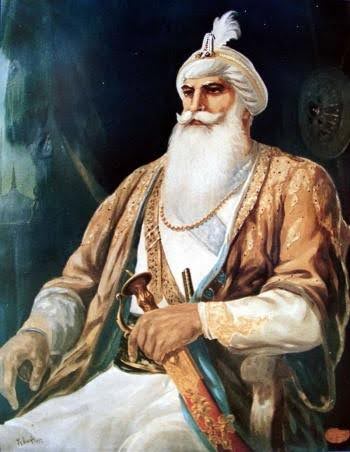
Sultan ul Quam Nawab Jassa Singh Ahluwalia (1718–1783) was a prominent Sikh leader during the period of the Sikh Confederacy. He was democratically elected as the supreme military commander of the Sikh Confederacy on March 29, 1748 – on Baisakhi, this appointment is considered to be one of the greatest honours ever bestowed, in the 18th century, to any Sikh.
He was further honoured by the Sikh Confederacy with the title of ‘Nawab’, at Amritsar in 1754, after the passing of Nawab Kapur Singh in 1753.
He was also the Misldar (Chief/Baron) of the Ahluwalia misl or army group. This period was an interlude, lasting roughly from the time of the death of Banda Singh Bahadur in 1716 to the founding of the Sikh Empire in 1801. The period is also sometimes described as the Age of the Misls. He was the also the fourth jathedar (leader) of Buddha Dal.
Early life
Sultan ul Quam Nawab Jassa Singh Ahluwalia was born into a Sikh Kalal Caste Family at the village of Ahlu, in Lahore district of Punjab, (Majha region), in the year 1718. Ahlu village was established by his ancestor, Sadda Singh, a disciple of the sixth Sikh Guru, Guru Har Gobind. Hence, the name Ahluwalia (meaning from Ahluwal). His forefathers were landlords who were rewarded four villages ahlo, hallo, toor, chak for their bravery in war. He was destined to be Sultan-Ul-Kaum as this nobility was given to him by Nawab Kapur Singh himself.
At the tender age of 4, Jassa Singh’s father, Sardar Badar Singh passed away (1723 A.D). There after his mother moved them to Delhi where they stayed and performed Kirtan of the highest order. Mata Sundri Kaur ji was much pleased with the young Singh and bestowed upon him great blessings. After seven years in Dehli, at the age of 12, Jassa Singh and his mother moved back to Punjab at the insistence Jassa Singh’s uncle – however not before Mata Sundri would make a prophecy – that Jassa Singh would become a ruler of men.
S.Jassa Singh and his mother settled in the vicinity of Jalandhar and began performing Kirtan in the early mornings (Jassa Singh was a great Rabab instrumentalist and ‘Kirtan Kaar’, who later patronised the Kapurthala Rababi Gharana). On one Gurpurb, along with Singh’s uncle, mother and child went to visit Nawab Kapur Singh in Kartapur. While singing the hymns of Asa di Var in the early morning, the Nawab Kapoor Singh was so impressed with the melody of Kirtan, that he persuaded them to stay for one month. After this period, the Nawab recognised the conduct and potential of Jassa Singh, hence requested the uncle and mother that they leave the boy with him to adopt. It should be noted, that Nawab Kapoor Singh was the leader of the Khalsa Panth for a reason; he was a true Sikh of the Guru; both incredibly brave and spiritual while remaining humble. From this moment, Jassa Singh’s tutelage began under the great Nawab Kapoor Singh.
Jassa Singh undertook each task designated to him with commitment like no other. One account recites that on one stormy night in torrential rain, the Nawab would call out to the watch guards, asking who was on duty – on each occasion, the steadfast Jassa Singh’s voice that was heard alone. Jassa Singh also began his training in the art of war, and became adept in horse riding, sword play and archery.
The formation of the Dal Khalsa and the Misls
Until 1745, the Sikh forces were divided into 65 jathas(bands). Baron Nawab Kapur Singh reorganised them into eleven bands, each of with its own name, flag and leader. These Armies or jathas, which came to known later on as Misls (literally “equal”, also “an example”) together were, however, given the name of the Dal Khalsa (or the Army of the Khalsa). Baron Jassa Singh Ahluwalia was nominated as the Supreme Commander of the Sikh Confederacy in addition to being Baron of the Ahluwalia Army (misl). Nawab Kapur Singh appointed him as his successor on the eve of his death in 1753. Elated at his successful helmsmanship, the Khalsa honoured Jassa Singh with the title of Sultan-ul-Qaum (King of the nation), when they captured Lahore in 1761. He has been credited for rebuilding the present day holy Harmandir Sahib, in the year 1764, which was destroyed, during the Afghan Invasions.
The raids of Ahmed Shah Abdali
Ahmed Shah Abdali, Nadir Shah‘s seniormost general, succeeded to the throne of Afghanistan, when Shah was murdered in June, 1747. He established his own dynasty, the Sadozai, which was the name of the Pashtun khel to which he belonged to.
Starting from December, 1747 till 1769, Abdali made a total of nine incursions into India . His repeated invasions destroyed the Mughal administration of the Punjab and the rest of Northern India. At the Third Battle of Panipat, he dealt a drippling blow to Maratha pretensions in the North. Thus he created a power vacuum in the Punjab, which was filled by the Sikhs.
Samadh Jassa Singh Ahluvalia
The Sixth Afghan Invasion, 1762: The Great Holocaust
A Typical Misl age warrior, Jassa Singh Ahluwalia would have commanded thousands of such mounted warriors during the Battle of Amritsar.
On February 5, 1762, the Sikhs were especially the target of Ahmad Shah Abdali’s sixth invasion into India. News had reached him in Afghanistan of the defeat of his general, Nur-ud-Din Bamezai, at the hands of the Sikhs who were fast spreading themselves out over the Punjab and had declared their leader, Baron Jassa Singh Ahluwalia, king of Lahore. To rid his Indian dominion of them once and for all, he set out from Kandahar. Marching with alacrity, he overtook the Sikhs as they were withdrawing into Malwa after crossing the Satluj.
The moving caravan comprised a substantial portion of the total Sikh population and contained, besides active fighters, a large body of old men, women and children who were being escorted to the safety of the interior. Surprised by Ahmad Shah, the Sikhs threw a cordon round those who needed protection, and prepared for the battle. In this formation and continuing their march, they fought the invaders and their Indian allies (The Nawabs of Malerkotla, Sirhind, etc.) desperately. Baron Charhat Singh Sukerchakia (the grandfather of Maharaja Ranjit Singh), Baron Hari Singh Dhillon and Baron Jassa Singh Ahluwalia led their forces with skill and courage. Jassa Singh sustained sixty-four wounds on his body, but he survived. Baron Charhat Singh rode to exhaustion, five of his horses one after another.
Ahmad Shah succeeded, in the end, in breaking through the cordon and carried out a full scale massacre. His orders were for everyone in native dress to be killed at sight. The soldiers of Malerkotala and Sirhind were to wear green leaves of trees on their heads to distinguish themselves from the Sikhs. Near the village of Kup, in the vicinity of Malerkotla, about 20,000 Sikhs died at the end of a single day’s action (February 5, 1762). This battle is known in Sikh history as the Wadda Ghalughara(The Great Holocaust). During the course of the Battle, Jassa Singh was reported to have had 72 wounds on his body but still survived, as did his counter paths from the other Sikh misls; Charat Singh Sukerchakia for example rode five horses one after the other to exhaustion and Jassa Singh Ramgharia sustained injuries to his body . Upon verbally challenging Ahmed Shah Abdali himself, Jassa Singh is known to have almost killed the Shah, narrowly missing him and killing his horse instead.
The Battle of Amritsar
Despite the Ghalughara disaster, by the month of May, the Sikhs were up in arms again. Under Jassa Singh, they defeated the Afghan faujdar of Sirhind, Zain Khan at Harnaulgarh in revenge for aiding Ahmed Shah Abdali in the holocaust. Instead of killing him, thy accepted his tribute of a large sum of money as they desprately needed the money to repair the Harimandir Sahib, however they promised the faujdar that his time would come (Zain Khan was later killed by Jassa Singh’s men in a battle under the ramparts of the Sirhind citadel.) By autumn, the Sikhs had regained enough confidence to foregather in large numbers at Amritsar to celebrate Diwali. Abdali made a mild effort to win over them and sent an envoy with proposals for a treaty of peace. The Sikhs were in no mood for peace and insulted the emissary. Abdali did not waste any time and turned up at the outskirts of Amritsar.
The Second Battle of Amritsar (October 17,1762) was fought in the grey light of a sun in total eclipse. It ended when the sunless day was blacked out by a moonless night with the adversaries retiring from the field: The Sikhs to the fastness of the jungles of the Lakhi (the forests of a hundred thousand trees located in Central Punjab) and Abdali behind the walled safety of Lahore. It was the first major battle against the Sikhs that the Shah was himself present (excluding the Great Holocaust) and ended in total disaster for the Afghan army, Jassa Singh captured a large portion of Ahmed Shah Abdali’s troops and forced the very hands that had caused big damage to the holy Sarovar of the Harimandir Sahib to repair and renovate it. After this Jassa Singh, in the greatest gesture of chivalry released the prisoners, warning them not to return to Punjab, many seeing the high character of the Sikh Nation, many Afghans, became Sikhs.
The Eight Afghan Invasion, 1766
In November 1766 Abdali came to the Punjab for the eight time with the avowed object of “crushing the Sikhs”. The Sikhs had recourse to their old game of Dhai-phut(‘hit, run and turn back to hit again’) tactics (later made famous at the Battle of Chillianwala against the British). They vacated Lahore, but faced squarely the Afghan general, Jahan Khan at Amritsar. Inflicting a humiliating defeat,and forcing him to retreat, with five thousand Afghan soldiers killed. Jassa Singh Ahluwalia with an army of about twenty thousand Sikhs roamed in the neighbourhood of the Afghan camp, plundering it.
Death
Jassa Singh continued with his campaigns. After Abdali’s ninth and last invasion in 1769, Jassa Singh wrested Kapurthala in 1774 from Rao Ibrahim Bhatti and made it his headquarters. Jassa Singh died in Amritsar in 1783 AD. Being without a son (but having two daughters), he was succeeded by Sardar Bhag Singh Ahluwalia, whose son, Fateh Singh became a close collaborator of Ranjit Singh. Like the other Misldars, Jassa Singh also established a Katra or colony for his misl in Amritsar, which was later named Katra Ahluwalia in his honor. He, like many other Misldars also fortified the city of Amritsar for protection against the enimies of Sikhism. His fort and residence is known as Qila Ahluwalia and had unfortunately today fallen in bad shape. He spent his last days greatly renovating the city of Amritsar and reforming Gurdwara managemnet as well has developing the city greatly. Because of his many sacrifices and his great love for the Sikh nation, he was cremated within the Precincts of the Harimandir Sahib, which he fought so hard to protect (considered a great honor in Sikh tradition). A commemorative postage stamp on ‘Baba Jassa Singh Ahluwalia’ was issued by Government of India on April 04, 1985. Baron Sultan ul Quam Nawab Jassa Singh Kalal was also known as ‘Guru ka lal’ (the beloved son of Guru). Succeeded by Akali Nihang Baba Naina Singh Ji, as the next Jathedar who had lived upto a very old age.
Aftermath
After the death of the great Sultan Al Qaum Jassa Singh Ahluwalia, In the year 1783, The year when the Sikhs marched on Mughal Delhi, capturing the Shahi Lal Qila, the royal palaces of the Mughals, and hoisting the Nidhan Sahib, and throwing away the Mughal flag down, It was also the time when the 11 Sikh Kingdoms, known as Misls, started waging war against each other, to take more power for themselves. From 1783 until 1799, the power of the Sikh Sovereignty started declining and dismantal, with Zaman Shah, the Afghan ruler of Afghanistan, marched on Sikh territories and took Lahore In 1798 seeing the weakness of the Sikh power, but In 1799, Ranjit Singh, a young Sikh Chieftain, from Gujranwala, marched on Lahore, capturing the City without a fight, Zaman Shah fled back to Afghanistan, fearing he might lose. From 1799-1839, the Sikh power once again started becoming more powerful, which led the Sikhs from 1801-1834, to become the most powerful nation in all of Asia. The borders extended from Khyber Pass, and Sind, to Kashmir and Tibet, and the Hazara province.
But In 1846, the Sikh power declined as the Sikhs fought against the Invading British, losing many wars, Weapons, Treasury, Territories. In 1849, The Falling Sikh Empire was annexed to British Empire.
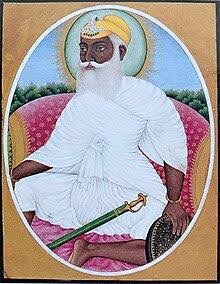
Baba Ala Singh (1691-1765), Sikh misl leader who became the first ruling chief of Patiala, was born in 1691 at Phul, in presentday Bathinda district of the Punjab, the third son of Bhai Ram Singh. His grandfather, Baba Phul, had been as a small boy blessed by Guru Hargobind, Nanak VI. Ala Singh’s father and his uncle, Tilok Singh, had both received the rites of initiation at the hands of Guru Gobind Singh who conferred on their family the panegyric, “Your house is mine own.”
Ala Singh was married at an early age to Fateh Kaur, popularly known as Mai Fatto, daughter of Chaudhari Kala of Khana, a zamindar of the village Kaleke, now in Sangrur district of the Punjab, and had three sons, Bhumia Singh, Sardul Singh and Lal Singh, all of whom died in his lifetime, and a daughter, Bibi Pardhan.
Ala Singh’s career of conquest began soon after the execution of Banda Singh Bahadur in 1716 when central Punjab lay in utter confusion. Ala Singh was living at Phul about 40 km from Bathinda. He gathered around him a band of dashing and daring young men. In 1722, he set up his head quarters at Barnala, 32 km farther east, and his territory comprised 30 odd villages. At Barnala, Ala Singh defeated in 1731 Rai Kalha of Raikot, an influential chief with a large force at his command. Aided by roving bands of the Dal Khalsa, he ransacked and annexed several villages belonging to the Bhattis. He also founded several new villages such as Chhajali, Dirba, Laungoval and Sheron. For a period Ala Singh remained in the custody of All Muhammad Khan Ruhila, Mughal governor of Sirhind from 1745-48, and was released only when the latter fled his capital at the approach in February 1748 of the Afghan invader Ahmad Shah Durrani. In the battle fought on 11 March 1748, near Manupur, 15 km northwest of Sirhind, between the Mughals and Ahmad Shah Durrani, Ala Singh sided with the former. He cut off Durrani’s supplies and captured his camels and horses. In 1749, Ala Singh defeated and repulsed Farid Khan, a Rajput chieftain, who had sought the help of the imperial governor of Sirhind and stopped the construction by him of a fort at Bhavanigarh. Three years later, Ala Singh, captured the district of Sanaur, called chaurasi, lit. eighty-four, from the number of the villages it comprised. One of these where he built a fort in 1763 and which was thence forth his permanent seat, became famous as Patiala. At the end of 1760, Ala Singh possessed 726 villages including many towns. On the eve of the battle of Panipat (1761) when the Marathas camp was blockaded by Ahmad Shah Durrani, Ala Singh helped them with food grain and other provisions. In the Vadda Ghallughara or Great Carnage of February 1762, Ala Singh remained neutral. Ahmad Shah punished him with the devastation of the town of Barnala. Ala Singh, who presented himself in the Shah’s camp, was ordered to shave off his head and beard. This he declined to do and offered instead to pay a sum of one and a quarter lakh of rupees. The Shah accepted the money but had him taken to Lahore where he secured his freedom by paying another five lakh of rupees. Ala Singh took the pahul in 1732 at the hands of Nawab Kapur Singh, leader of the Dal Khalsa. He was an ally of Jassa Singh Ahluwalia in the attack on Sirhind in 1764. Later he purchased this town from Bhai Buddha Singh to whom it had been assigned by the Khalsa. On 29 March 1761, Ahmad Shah Durrani had already recognized by a written decree the sovereignty of Ala Singh over the territories held by him. At the time of his seventh invasion of India, he confirmed him in the government of Sirhind (1765) and granted him the title of Raja, with the robes of honour as well as with a drum and a banner as insignia of royalty.
Ala Singh died on 7 August 1765 at Patiala and was cremated in the Fort, now inside the city.
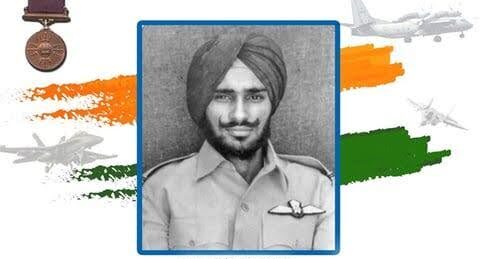
Flying Officer Nirmal Jit Singh Sekhon, PVC (17 July 1945 – 14 December 1971) was an officer of the Indian Air Force. He was posthumously awarded the Param Vir Chakra, India’s highest military decoration during war time, in recognition of his lone defence of Srinagar Air Base against a Pakistan Air Force (PAF) air raid during the Indo-Pakistani War of 1971. He is the only member of the Indian Air Force to be honoured with the PVC.
Early life
Nirmal Jit Singh Sekhon was born in a Sikh Jat family on 17 July 1943 in the village of Isewal, Ludhiana, Punjab Province, British India. His father was M.W.O. Tarlok Singh Sekhon and his mother was Harbans Kaur. He was commissioned into the Indian Air Force on 4 June 1967 as a Pilot Officer.
Param Vir Chakra Award
During the Indo-Pakistani War of 1971, he was serving with the No.18 Squadron, “The Flying Bullets” of IAF, flying the Folland Gnat fighter aircraft based at Srinagar. On 14 December 1971, Srinagar airfield was attacked by six Pakistan Air Force F-86 jets of 26 Squadron from PAF Base Peshawar. Flying Officer Sekhon was on readiness duty at that time. As soon as the first aircraft attacked, Sekhon rolled for take-off as No 2 in a two-Gnat formation, with Flt. Lt. Ghumman in lead, just as the first bombs were falling on the runway. Only delayed due to dust kicked up by the preceding Gnat, Sekhon lost no time in singling out the first Sabre pair, which was re-forming after the bombing run. The Gnat Leader, Flt. Lt. Ghumman lost visual with his wingman just after take-off, remained out of the fight leaving Sekhon to handle the muddle all by himself. In the ensuing air battle, Sekhon scored a direct hit on one Sabre and set another ablaze.The latter was seen heading away towards Rajauri, trailing smoke. However Pakistani records deny any aircraft losses to Sekhon.
Sekhon, after being hit, was advised to return to the base by ATC Squadron Leader Virendera Singh Pathania. He is said to have flown in straight, wings level for some time, then going inverted and plummeting down, probably due failure of control system. He attempted a last-minute ejection, which did not prove successful, as his canopy was seen to fly off. The wreckage of the Gnat was found in a gorge near the road coming from Srinagar town to the base, a few miles from the base. Despite many efforts by Army and Air Force, his remains were never found due to the mountainous terrain where his fighter went down.
A detailed story of his effort has been mentioned in fairly detailed account by Air Cdre Kaiser Tufail. His skill was later also praised in an article by Salim Baig Mirza, the pilot who shot him down. The bravery, flying skill and determination displayed by Flying Officer Sekhon, against odds of 1:6, earned him India’s highest wartime medal for gallantry, the Param Vir Chakra.
Flying Officer Nirmal Jit Singh Sekhon was a pilot of a Gnat detachment based at Srinagar for the air defence of the valley against Pakistani air attacks. From the very outbreak of the hostilities he and his colleagues fought successive waves of intruding Pakistani aircraft with valour and determination, maintaining the high reputation of the Gnat aircraft. On 14 December 1971, Srinagar airfield was attacked by a wave of enemy Sabre aircraft. Flying Officer Sekhon was on readiness duty at the time. Immediately, however, no fewer than six enemy aircraft were overhead, and they began bombing and strafing the airfield. In spite of the mortal danger of attempting to take off during the attack, Flying Officer Sekhon took off and immediately engaged a pair of the attacking Sabres. In the fight that ensued, he secured hits on one aircraft and damaged another. By this time the other Sabre aircraft came to the aid of their hard-pressed companions and Flying Officer Sekhon’s Gnat was again outnumbered, this time by four to one.
Even though alone, Flying Officer Sekhon engaged the enemy in an unequal combat. In the fight that followed, at treetop height, he almost held his own, but was eventually overcome by the sheer weight of numbers. His aircraft was shot down by a gunfire of one of the Sabres and he was killed.
The sublime heroism, supreme gallantry, flying skill and determination above and beyond the call of duty displayed by Flying Officer Sekhon in the face of certain death have set new heights in Air Force traditions.
Honours
Nirmal Jit Singh Sekhon is remembered for his gallantry and statues of him have also been erected in many cities in Punjab.
A marine tanker built in 1985 was named Flying Officer Nirmal Jit Singh Sekhon, PVC.